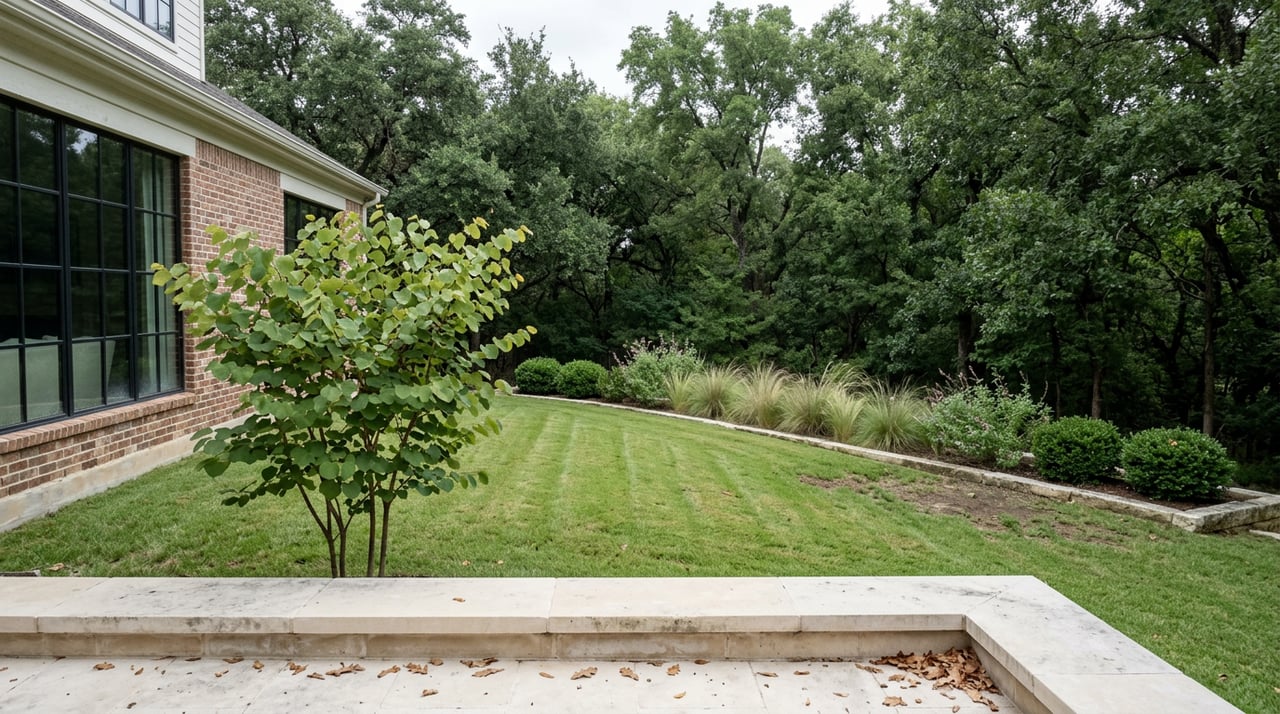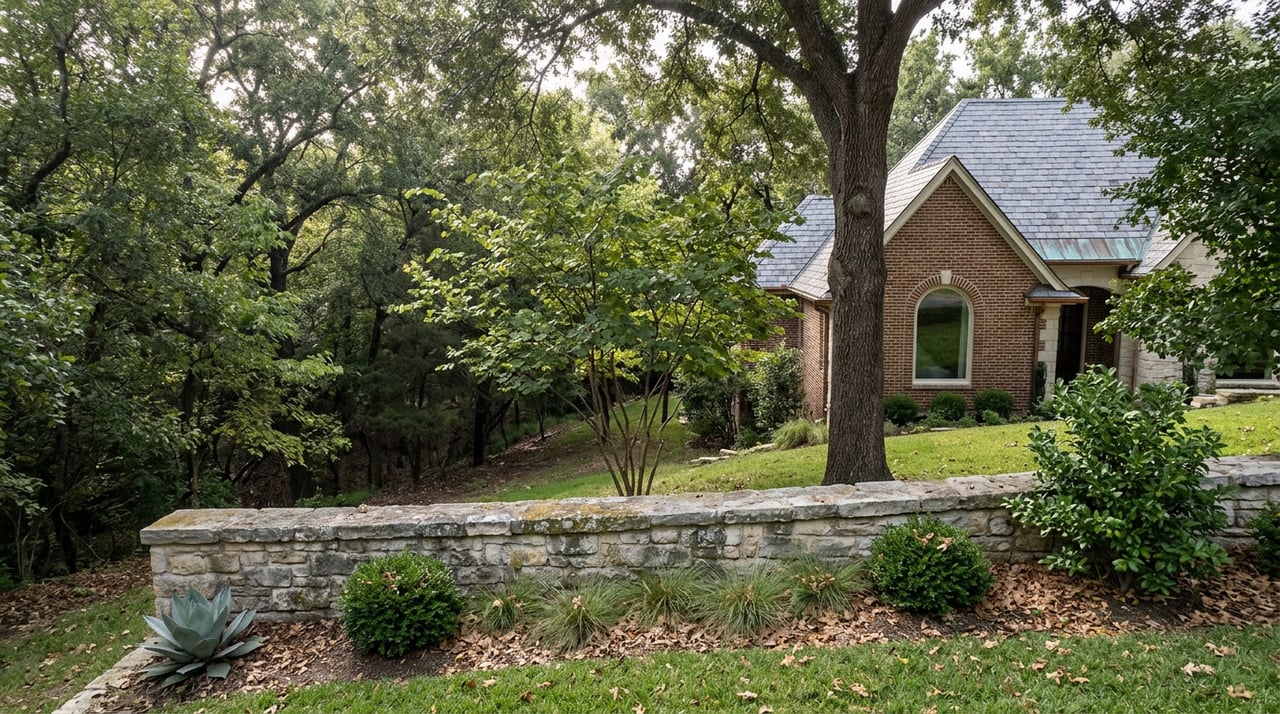
Drive west on Ranch Road 2222 past the Balcones curves and you will pass a chain-link fence with a locked gate, 216 acres of hill country pressed up against some of the most established real estate in Northwest Austin. Most people who pass it assume it is a park like any other, something you could wander into on a Tuesday afternoon if you had the time. It is not. Bright Leaf Preserve, the wooded acreage that sits along the neighborhood's western edge near Mount Bonnell Road, only lets people in on a guided hike, and guided hikes only happen a couple of mornings a month.
That single fact says more about how this neighborhood actually functions than any list of nearby amenities could. Highland Park West doesn't have an open backyard. It has two of them, and both run on somebody else's calendar.
The preserve behind the fence
Bright Leaf's story starts with Georgia Lucas, who spent years buying up parcels of hill country land one deal at a time. Nature Rocks Austin, the conservation-education nonprofit that has documented the preserve's history, describes how she assembled the property through 34 separate real estate transactions before her death, then wrote into her will that the land could never be opened to unrestricted foot traffic. It had to stay a place for guided walks, not a trailhead anyone could park at and disappear into.
That restriction has outlived her by decades. Management of the land passed from the Texas Parks and Wildlife Department to the Austin Community Foundation, and the guided-only rule has held through the change of hands. If you want to see the creek crossings, the wildflower stretches, or the rise locals call Mount Lucas, you sign up for one of the scheduled mornings and you walk it with a docent. There is no other way in.
For a neighborhood that markets itself on proximity to nature, that is an odd arrangement to build a lifestyle around. But residents have built one anyway, because the alternative is treating 216 acres of hill country as scenery you look at from the car instead of ground you actually walk.
The base with one weekend in April
The other half of the calendar belongs to the Texas Military Department. Camp Mabry sits inside the same stretch of Northwest Austin, and for most of the year it functions the way any military installation does: valid photo ID to get past the gate, business conducted on its own schedule, not a place residents wander through. Once a year, usually in April, that changes for one free weekend.
The Texas Military Department hosts what it now calls the Camp Mabry Living History Weekend, a two-day event where the 26,000-square-foot Texas Military Forces Museum opens its full collection of tanks, helicopters, and artifacts to the public, and reenactors stage a full-scale World War II battle at 1 p.m. each day. This year's installment ran April 18 and 19, with a weapons demonstration each morning and the battle reenactment each afternoon. Admission and parking are free, but adults still need a valid photo ID to get on post, a reminder that this is a working military installation opening its doors for two days, not a public park that happens to have tanks in it.
Between the preserve and the base, the two biggest pieces of open ground touching this neighborhood are locked most of the year and only unlock on a schedule someone else sets.
Why the neighborhood association keeps a liaison for both
This is where the arrangement stops being a quirk and starts explaining something real about how the neighborhood organizes itself. The Highland Park West Balcones Area Neighborhood Association, known locally as HPWBANA, lists a Community Liaison role on its own contact page with a job description that names both institutions directly: keep communication open with Camp Mabry, Bright Leaf, and the Highland Park PTA, and pass updates through the newsletter.
That is not a role a neighborhood association creates for a park that is simply always open. You do not need a liaison to tell people the swings are unlocked. You need one when the two best natural and historical assets near your homes operate on restricted, occasionally shifting calendars, and missing the window means waiting another month or another year. HPWBANA built a formal channel because informal word of mouth was not reliable enough to catch a hike schedule and an annual open house on the same watch.
The one green space that does not require an appointment sits closer to the center of the neighborhood. Perry Park, behind Highland Park Elementary on Fairview Drive, is the only official City of Austin park inside HPWBANA's boundaries, built on what used to be a limestone quarry before it became a playground. It is small and it is walkable any day of the week, which is exactly why the neighborhood association leans on it for the events that need reliable timing: the Spring Egg Hunt and the Movie Night in the park, both organized directly by HPWBANA rather than scheduled around an outside institution's calendar. Perry Park is the neighborhood's one guaranteed outdoor space precisely because everything grander nearby comes with conditions attached.
What comes after the gate opens
The reward for planning around those two calendars tends to land in the same few blocks along Balcones Drive and North Loop. Chez Zee American Bistro has anchored weekend brunch here since 1989, which puts it at 37 years running by its own account, long enough that "we'll go to Chez Zee after" has become shorthand for what a Bright Leaf morning or a Camp Mabry weekend turns into by early afternoon.
A few minutes away on West North Loop Boulevard, Fonda San Miguel just finished marking its own half century, with a full-color anniversary cookbook released in 2025 documenting five decades of the restaurant's collection of Mexican regional cuisine and gallery-grade art. Austin's CultureMap named it a nominee for Restaurant of the Year in its 2026 Tastemaker Awards, calling out how little the kitchen's core identity has shifted even as the city around it changed constantly. This year the restaurant expanded next door with Tzintzuntzan, a breakfast and lunch spot serving the parts of the day Fonda San Miguel's dinner-only hours never covered, giving the same North Loop stretch a morning option it did not have before.
None of that dining corridor exists because of Bright Leaf or Camp Mabry directly. But the rhythm of the neighborhood connects them anyway. A guided hike ends around noon. A Living History Weekend battle reenactment wraps by early afternoon. Either way, the next stop is a five-minute drive to a restaurant that has been serving this stretch of Austin longer than most of the homes around it have changed hands.
The two dates worth marking
If you live here and want to actually use what is nearby instead of just living next to it, there are two windows to track rather than one open gate to walk through:
- Bright Leaf's guided hikes run on a limited monthly schedule, historically weekend mornings, confirmed through the preserve's own site before you plan around it, since group size and timing shift.
- Camp Mabry's Living History Weekend runs one free weekend each spring, typically April, with the exact dates announced by the Texas Military Department in the months before.
Neither of those is the kind of thing you stumble into. Both are the kind of thing HPWBANA's newsletter exists to catch, which is why the association built a role specifically to watch for them.
Living in Highland Park West means learning that the neighborhood's best ground is not a backyard you own. It is a calendar you keep.
If you are thinking about where a neighborhood like this fits into a longer-term plan, whether you already live here or you are weighing a move into Northwest Austin, Katherine Beckworth has spent a career learning exactly this kind of local detail. Let's Connect.